Guide to Vitiligo
Is the appearance of white patches on the skin vitiligo? Specialists delve into the causes, diagnostic methods, and three major treatment options.
Vitiligo, also known as leukoderma or achromia, is a chronic skin condition characterized by the loss of pigmentation due to the reduction or disappearance of melanocytes—cells responsible for producing melanin. This results in clearly defined white patches on the skin. Although it can affect one's appearance, significant medical advancements—ranging from traditional phototherapy to the latest immunomodulatory drugs—now offer us more tools to manage the condition, even restoring skin color.
Vitiligo is neither an infectious disease nor a malignant tumor. However, it is not just a "cosmetic issue"; it is fundamentally classified as an autoimmune disease. This article aims to comprehensively clarify the true nature of vitiligo, helping you navigate through confusion and seize the opportunity for timely treatment.

Common Symptoms and Types
The onset of vitiligo can be subtle or aggressive. Understanding its characteristics aids in communication with your doctor.
Typical Symptoms:
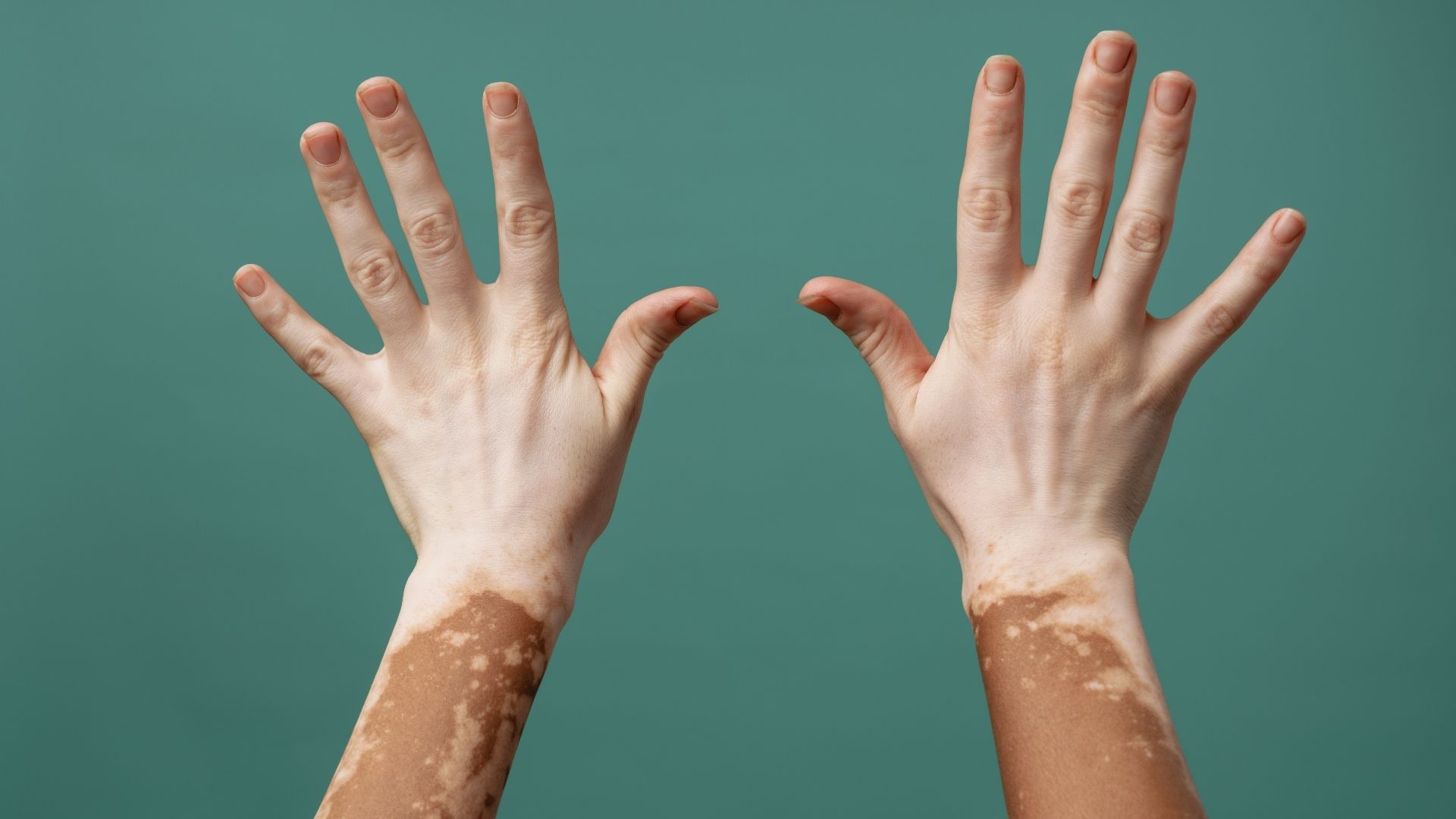
- Color: Initially, patches may appear light white or pale pink, later turning a chalky white.
- Boundary: There is usually a clear distinction between the patches and normal skin, sometimes accompanied by darker pigmentation at the edges.
- White Hair: If hair follicles within the patches are affected, hair in that area—such as body hair, eyebrows, and even eyelashes—may turn white (Leukotrichia), indicating potential damage to melanin reserves in those follicles.
- No Sensation: Most vitiligo patches are painless and itch-free, with smooth skin surfaces and no scaling (this helps differentiate it from fungal infections).
Common Types:
- Generalized Vitiligo: This is the most prevalent clinical type, characterized by "symmetry." Discolored patches usually appear simultaneously on corresponding areas of the body (such as both hands, knees, or elbows) and can expand. The progression of this type is often unpredictable, with intermittent spread.
- Segmental/Localized Vitiligo: In this form, only specific body areas are affected, generally appearing on one side or a particular section. Typically, it occurs at a younger age and has a rapid onset, but it often stabilizes after one or two years of continuous spreading, with minimal changes thereafter.
- Acrofacial Vitiligo: This type has a distinctive distribution, primarily affecting skin on the face (especially around the eyes, nose, and ears) and hands (like fingertips and knuckles). These areas are difficult to cover with clothing, which can significantly impact the patient's social confidence.
- Universal Vitiligo: This is a rarer and more severe type, affecting nearly all skin surfaces and resulting in widespread depigmentation, where only sparse remnants of the original skin color may remain.
Professional Diagnostic Process
If you notice white patches on your skin, do not mistake them for ordinary fungal infections or eczema, and refrain from self-medicating. Seek medical attention promptly for professional advice.
1. Doctor's Consultation and Skin Examination
A dermatologist will ask detailed questions about:
- The onset time of the white patches, the speed of spread, and whether it exhibits symmetry.
- Any itching, pain, or other skin symptoms.
- Personal and family medical history (including vitiligo, thyroid disease, diabetes, and other autoimmune conditions).
- Past skin injuries, burns, sunburns, or exposure to chemicals.
The doctor will examine the skin under natural light and ultraviolet light (Wood’s lamp), as vitiligo patches typically appear more pronounced and milky white under UV light.

2. Skin Biopsy (if necessary)
If diagnostic results are unclear, the doctor may recommend a skin biopsy to microscopically confirm whether melanocytes have decreased or disappeared.
3. Blood Tests (to assess related diseases)
Some patients may undergo blood tests to rule out common autoimmune diseases or thyroid dysfunctions, such as thyroid function or blood sugar levels.
Seizing the "Golden Treatment Time"
Clinical experience shows that the first year after onset is the most crucial time for treatment. Early vitiligo typically has intact "melanocyte stem cells" deep within the hair follicles. If treatment is initiated during this period to awaken these cells, the success rate for repigmentation is significantly higher. Once hair follicles turn white, treatment becomes much more challenging.
Treatment Directions for Vitiligo
Vitiligo treatment in Hong Kong is well-developed, offering various therapeutic options to slow progression, promote repigmentation, and enhance appearance. Dermatologists will devise a tailored plan based on the patient’s age, location of white patches, extent, and stability of the condition.
1. Topical Treatments
- Topical Corticosteroids: A traditional first-line medication that can suppress immune responses. However, long-term use may lead to thinning of the skin, requiring close monitoring by a doctor.
- Calcineurin Inhibitors: Such as Tacrolimus or Pimecrolimus. These non-steroidal ointments are suitable for use on the face, around the eyes, and in children, with a high safety profile.
- JAK Inhibitors (like Ruxolitinib): This represents a recent breakthrough in dermatology. The FDA has approved topical JAK inhibitors for the treatment of vitiligo, which effectively block the immune signaling pathways that cause patch depigmentation, showing promising results for facial repigmentation.
2. Phototherapy
Targeted for widespread or extensive vitiligo.
- Narrowband UVB (NB-UVB): Employs specific wavelengths (311nm) to irradiate the skin, effectively suppressing immune attacks and stimulating melanocyte regeneration. Treatments usually occur 2-3 times a week, with fewer side effects compared to traditional phototherapy. It can also be used by pregnant women and children as appropriate.
- Excimer Light/Laser: This targets localized, stubborn white patches, delivering concentrated energy for faster results.
3. Surgical and Regenerative Treatments (for stable patients)
If your white patches have not spread in the past 12 months and medication has been ineffective, surgical options may be considered.
- Mini-Punch Grafting: Transferring small circular pieces of normal skin to the affected areas.
- Autologous Melanocyte Cell Transplantation: A small piece of normal skin is taken from the patient’s thigh, melanocytes are isolated in the laboratory, and then sprayed onto the abraded white patches. This technique is minimally invasive, suitable for larger patches, and offers excellent skin tone uniformity.
Daily Care and Psychological Support
Treating vitiligo is a long-term commitment. Alongside medical treatment, daily habits play a crucial role.
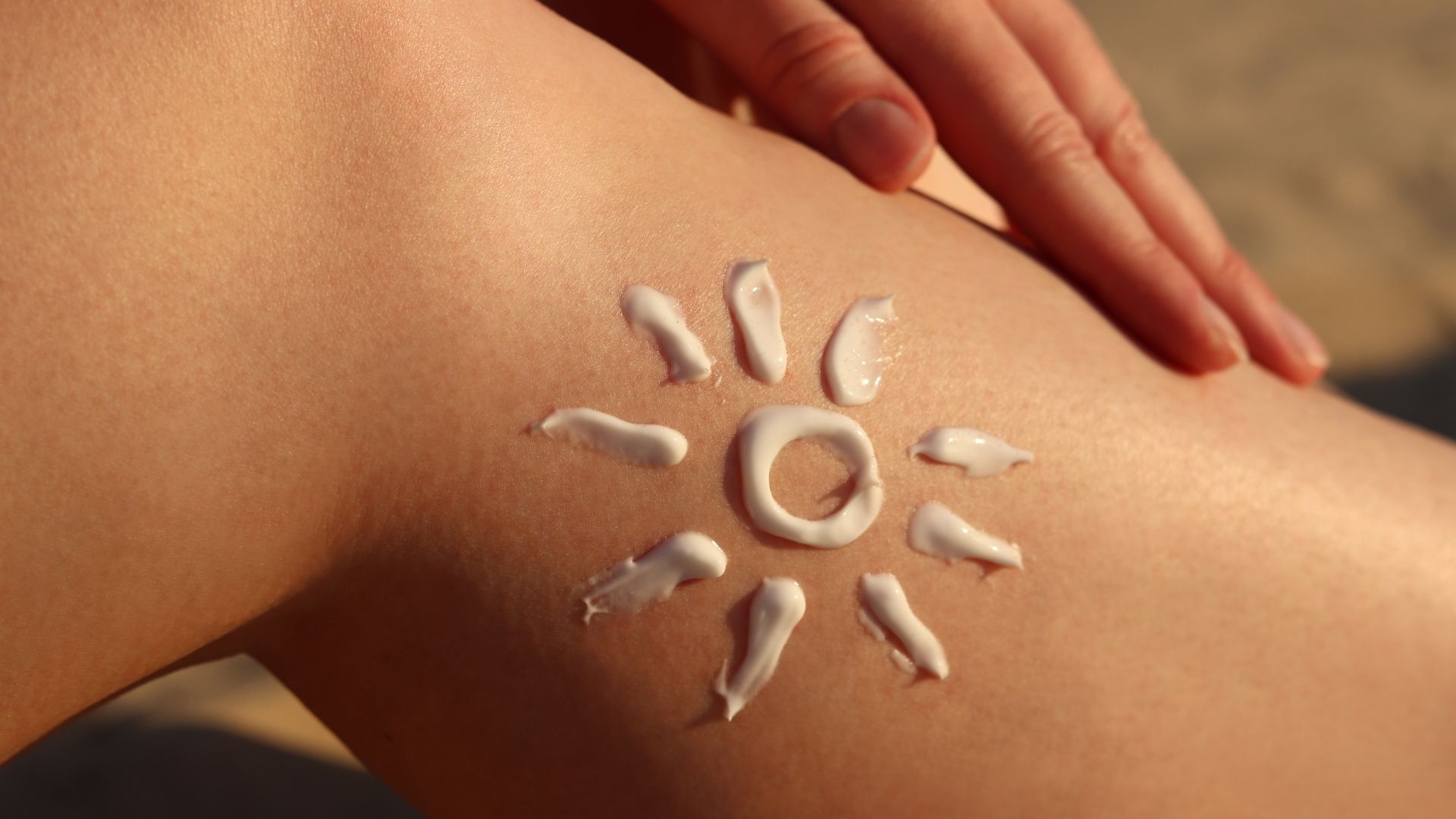
- Strict Sun Protection: This goes beyond aesthetic concerns. The white patches lack melanin protection, making them highly susceptible to sunburn. Use sunscreen with SPF 30 or higher.
- Avoiding Injuries: Prevent skin injuries and excessive friction (e.g., wearing tight clothing) to avoid triggering the Koebner phenomenon, which can cause patches to spread.
- Nutritional Intake: Maintain a balanced diet rich in antioxidants (such as dark green vegetables) to help combat oxidative stress.
- Psychological Adjustment: Vitiligo is not contagious, but societal views can create psychological stress. Seeking psychological counseling or joining support groups, along with building trust with healthcare providers, is crucial for long-term treatment success.
FAQs
-
Q1: Can vitiligo develop into skin cancer (melanoma)?
A: The pathologies of both conditions are entirely different. Vitiligo involves reduced pigmentation (benign), while melanoma is a malignant tumor. However, if you notice changes in existing moles—such as asymmetry, irregular borders, uneven color, a diameter greater than 6mm, or alterations (enlarging, bleeding, itching)—seek medical attention promptly for a thorough evaluation.
-
Q2: Is vitiligo contagious?
A: No. Vitiligo is an autoimmune issue, not caused by bacterial or viral infections. It cannot be transmitted to others through contact or shared utensils. This misconception requires public awareness.
-
Q3: Can I swim if I have vitiligo?
A: Yes. Swimming itself does not harm vitiligo, and exercise can help alleviate stress. However, keep two essential points in mind: first, when swimming outdoors, apply a waterproof sunscreen; second, chlorine in pool water can dry the skin, so rinse off and apply moisturizer promptly after swimming.
If you notice unusual white spots on your skin or have concerns, consult a dermatologist immediately.
Updated: 2026‑02
Disclaimer: The health information on this website has been reviewed by doctors from Chiron Medical Group. The above content is for general reference only and should not be regarded as medical advice. It is not a substitute for consultation with qualified healthcare professionals about your personal health condition.